

Prefer to watch? The full Budget & Baller breakdown is on our channel.
This is not a precon upgrade. It is my personal Squirrel Girl birthday build: a mono-green Commander deck made to create an absurd army and give the rest of the table a memorable fight. The baller build leans into premium mana engines and explosive combo turns. The budget build keeps the Squirrel identity while removing expensive pieces and several repeatable combo engines.
The goal is not to claim a solved competitive list. It is to make a deck with personality, understand what makes it powerful, and choose the version your table will enjoy.
Both linked lists contained 100 cards, including the commander, when checked on September 20, 2026. Lists can change; the comparison below reflects that check.

How Squirrel Girl actually wins
The Unbeatable Squirrel Girl costs one generic and three green mana. She makes a Squirrel when she enters or attacks, then her four-mana activated ability makes a Squirrel token for each Squirrel you control. She counts herself. Tapped Squirrels and ones that just entered count too.
That creates the central plan: establish mana, build your Squirrel count, activate repeatedly, and turn the army into a combat finish. The challenge is paying for the activations and making sure your new creatures can actually attack when you need them.
The baller build: turn Squirrels into mana
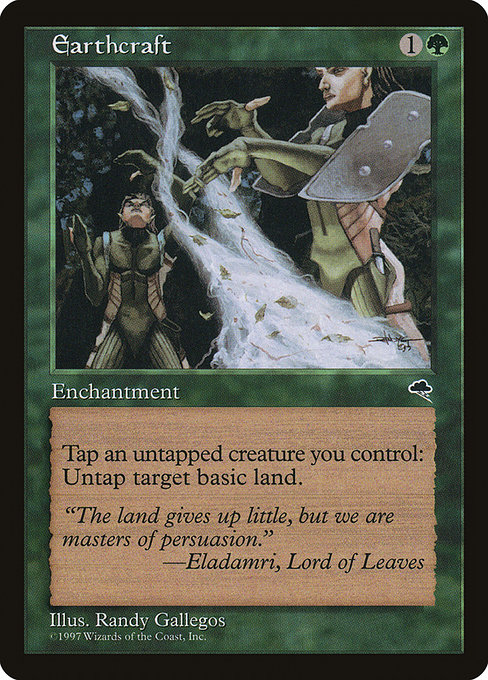
- Earthcraft: tapping a creature pays the enchantment's cost; the creature is not activating its own tap-symbol ability. That means a newly created Squirrel can untap a basic Forest immediately.
- Cryptolith Rite + Thousand-Year Elixir: the Rite grants creatures a tap-for-mana ability, and the Elixir lets new creatures activate it as though they had haste. Unlike Earthcraft, the Rite alone does not get around summoning sickness.
- Jaheira, Friend of the Forest: another token-to-mana engine. Her ability applies to tokens, not every creature, so count your available token mana carefully.
- Gaea's Cradle: turns a wide creature board into a large burst of green mana. It is powerful support, not a requirement for enjoying a Squirrel deck.
A concrete Earthcraft loop
With Squirrel Girl, Earthcraft, four untapped basic Forests, and at least four Squirrels total, tap the Forests to pay for an activation. You make at least four new Squirrels. Tap four of the new tokens through Earthcraft to untap the Forests, then repeat. The Squirrel count grows, and later iterations leave spare creatures available. Opponents can still interact; demonstrate the loop and agree on a finite shortcut rather than physically repeating it forever.
Earthcraft + Squirrel Nest is another route: enchant a basic Forest with the Nest, tap it to make a Squirrel, and tap that Squirrel through Earthcraft to untap the Forest. Repeating this produces tapped Squirrels. Haste alone does not untap them; a same-turn attack requires another step, such as producing spare untapped tokens with Doubling Season.
The premium cards: what are you actually paying for?
Price alone does not explain a card's job. Some premium cards accelerate the opening turns, others multiply an established board, and others make the finish more consistent. Just as importantly, not every expensive card is in the Baller list, and not every premium card was removed from Budget. Here is how the linked builds actually use them.
Gaea's Cradle — Baller only
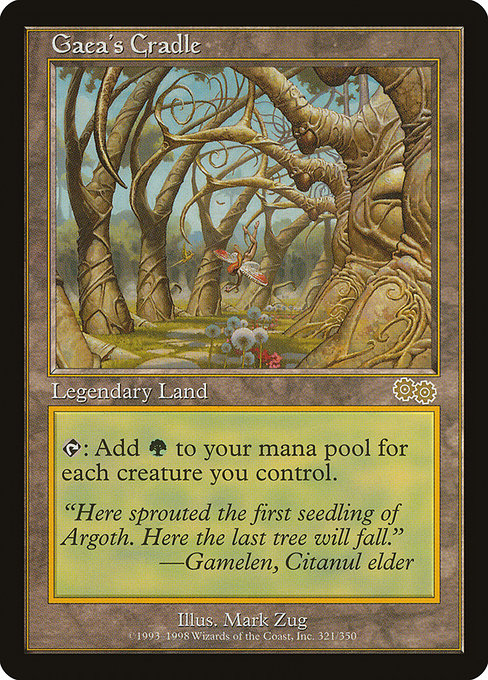
Cradle converts your creature count into green mana without a separate activation payment. Five creatures mean five green mana; a large Squirrel army can fund multiple commander activations. It counts your Elves and other support creatures as well as Squirrels, which makes it useful before the tribe takes over the battlefield.
The drawback is real: with no creatures it produces no mana. It also is not a basic Forest, so Earthcraft cannot untap it. This is a premium accelerator for a functioning creature board, not a replacement for a reliable opening mana base.
Three Tree City — retained in BOTH builds
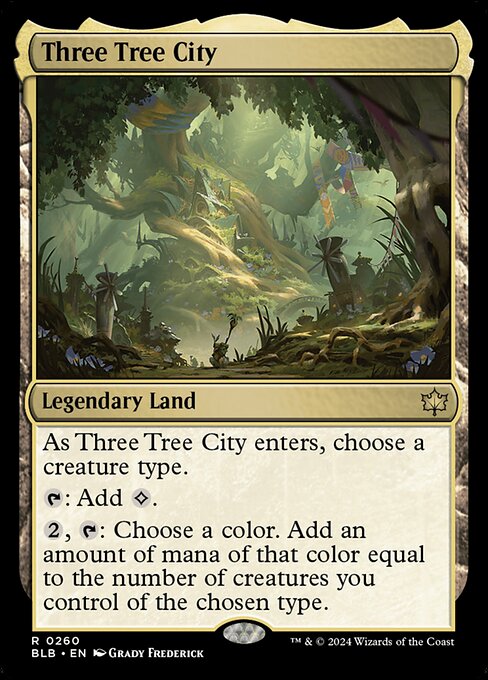
Three Tree City is the tribal mana land we keep in both versions. Choose Squirrel as it enters. Its larger ability costs two mana and tapping the land, then produces mana equal to your Squirrel count, including Squirrel Girl. With six Squirrels, you pay two mana to produce six green. It does not count an Elf or another creature merely because that creature helps the deck.
Unlike Cradle, City can still tap for one colorless mana when your board is empty. That is useful, but colorless does not pay Squirrel Girl's three green symbols. City also is not a basic land. Keeping it is a deliberate compromise: this Budget build is a less expensive version of the personal deck, not an absolute lowest-cost list.
Mox Diamond — a premium option, NOT in either linked list
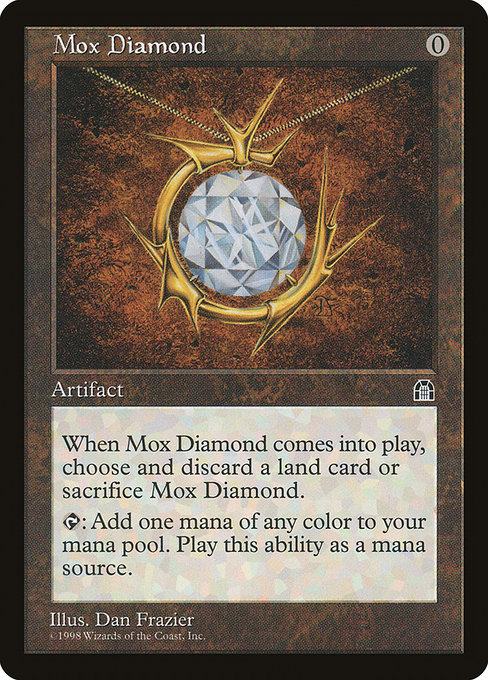
Mox Diamond can provide immediate colored mana without spending mana to cast it, but keeping it requires discarding a land card. That can accelerate an opening while reducing the lands left in your hand. A hand with Diamond is not automatically better if it then misses land drops.
Neither published build includes Mox Diamond. There is therefore no Diamond slot to replace when converting these lists. You do not need to buy one to follow this guide. The existing Sol Ring, mana creatures, land enchantments, and land-search spells already form the acceleration package. Emerald Medallion is also already in both decks, but reducing green spell costs is a different job from producing mana.
Doubling Season — Baller only
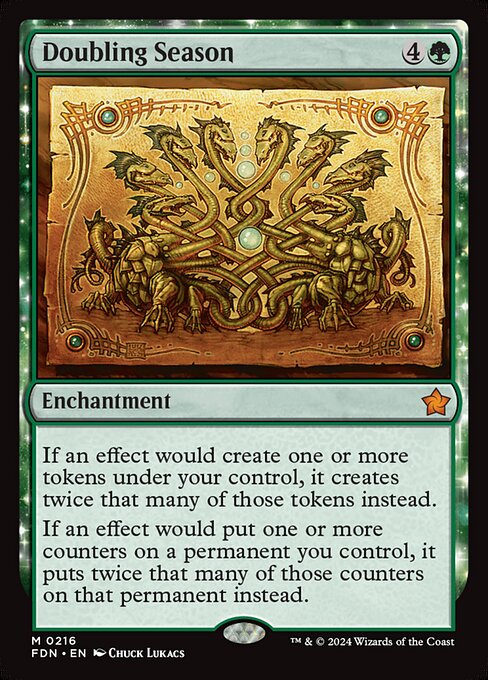
Season makes each token-producing effect larger and also amplifies counters placed by effects. With ten Squirrels already in play, a normal commander activation makes ten more; with Season it makes twenty more, leaving thirty total. It does not merely turn the total from ten into twenty.
That second ability matters with Champion of Lambholt, Mossborn Hydra, and Chitterspitter's acorn counters. The tradeoff is spending a turn's worth of mana on an enchantment that needs other cards to produce value. Budget keeps a burst token-copying spell instead of this repeatable multiplier; that distinction matters.
Phyrexian Altar — Baller only
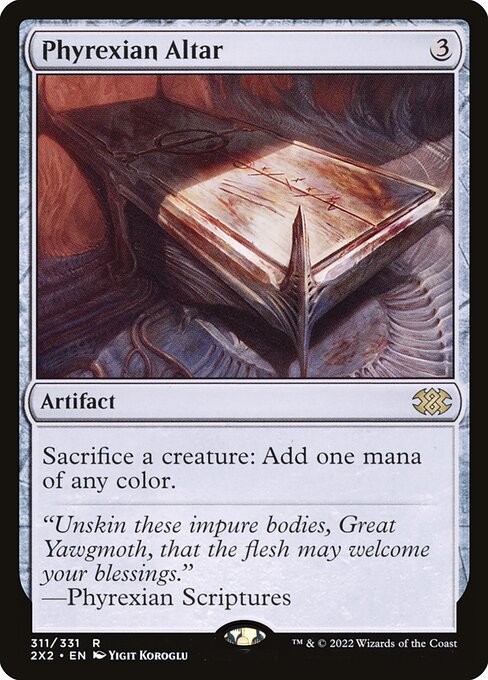
Altar lets you sacrifice a creature for one mana of any color. It does not tap, and the sacrificed creature can be tapped or newly created. After an Earthcraft–Squirrel Nest loop, those tapped Squirrels can become mana to cast a large Finale. You are spending creatures, however, so count what remains before assuming another Squirrel Girl activation replaces everything sacrificed.
Removing Altar is an intentional change to how Budget plays, not just a price concession. That version does not need a cheaper sacrifice outlet forced into the same slot; more of its army remains on the battlefield for combat.
The Great Henge — Baller only
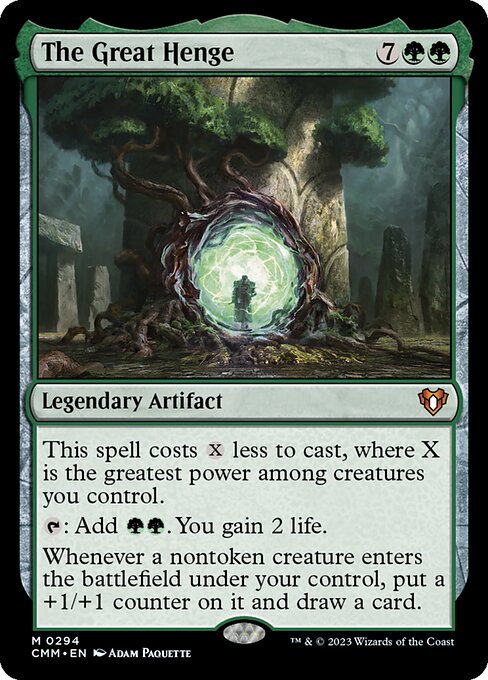
Henge bundles mana, life, counters, and repeated card draw into one artifact. A large Squirrel Mob or Hydra helps reduce its generic casting cost, and it can tap for two green mana once it resolves. Its draw trigger comes from nontoken creatures entering: creating a hundred ordinary Squirrel tokens does not draw a hundred cards.
That makes Henge a powerful support engine rather than the sole reason the token plan works. The Budget deck keeps several different draw engines instead of trying to find one inexpensive card that reproduces everything Henge does.
The Earth Crystal — Baller only; Emerald Medallion stays
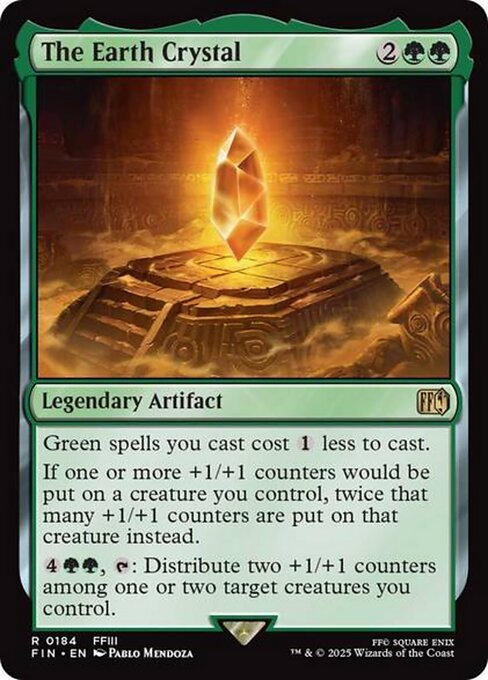
The Crystal reduces generic costs on green spells and doubles +1/+1 counters placed on your creatures. Champion of Lambholt grows faster, and Mossborn Hydra's counter growth becomes more dramatic. It does not double Squirrel tokens or Squirrel Mob's static bonus.
Neither the Crystal nor Emerald Medallion reduces Squirrel Girl's activated ability. They reduce spell costs, not activation costs, and cannot remove required green mana symbols. Budget already contains Medallion, so we retain that portion of the plan without adding another copy. Losing the Crystal still means losing its counter-doubling benefit.
Premium creature tutors — precision rather than extra Squirrels
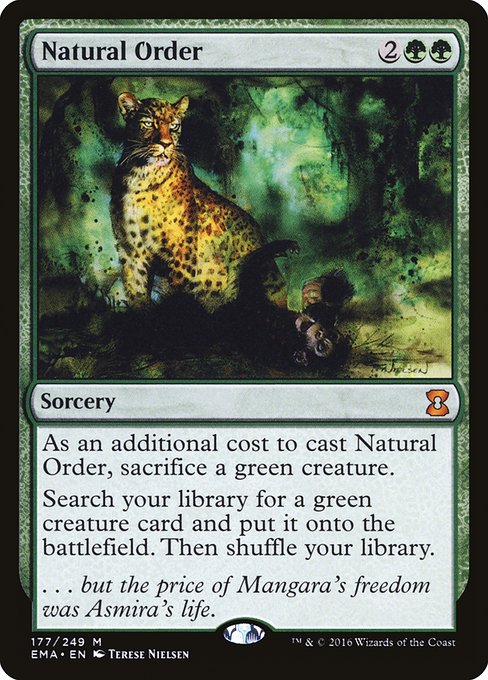
Natural Order sacrifices a green creature to find a green creature directly onto the battlefield. A spare Squirrel can become Craterhoof when the board is ready, or Lumra when land recovery is the useful play. The sacrificed creature is already gone if the spell is countered.
Worldly Tutor finds a creature and puts it on top of your library, not into your hand or onto the battlefield. Green Sun's Zenith finds a green creature with mana value up to X and puts it onto the battlefield. None of these three directly searches for Earthcraft, Doubling Season, or another noncreature enchantment.
All three are removed in the Budget conversion. Creature-selection spells take some of their slots, but looking through a few cards is not the same as choosing exactly the creature you need.
Finale of Devastation — retained in BOTH builds
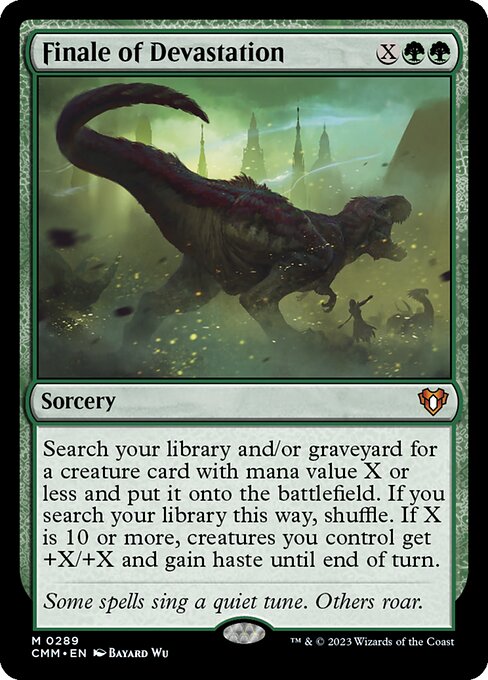
Finale is another intentional premium holdover in Budget. It can find a creature from the library or graveyard; at X of ten or more, it also gives your creatures +X/+X and haste for the turn. That can close a game even after the Budget conversion removes Craterhoof and Memorial.
Keeping Finale does not make the cheaper deck a bare-bones budget build. It means we chose to preserve a flexible signature finisher. If your spending limit is lower, treat that as a separate tuning decision rather than assuming this list already removes every expensive card.
Heroic Intervention — Baller only
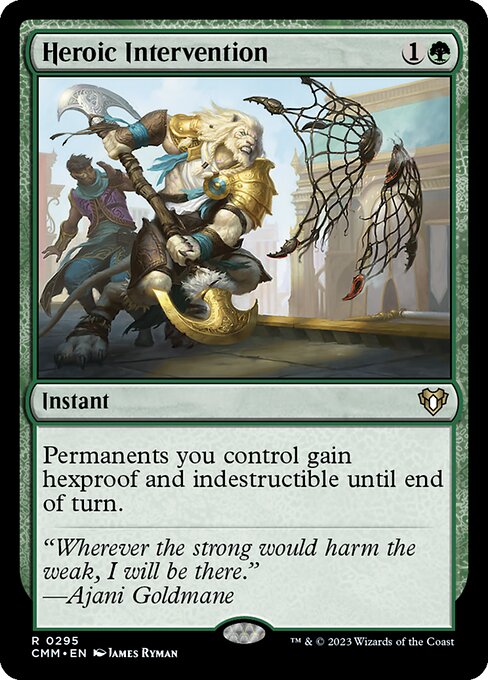
Giving your permanents hexproof and indestructible protects more than the creature army: important artifacts and enchantments benefit too. It can stop targeted interaction and many destruction effects. It does not stop an untargeted exile effect, sacrifice, or a creature dying from having zero toughness.
Budget trades this broad spell for narrower tools and recovery. That is a genuine loss of flexibility, not a claim that regeneration and indestructible are interchangeable.
The finishers: why the premium versions matter
Craterhoof Behemoth — Baller only
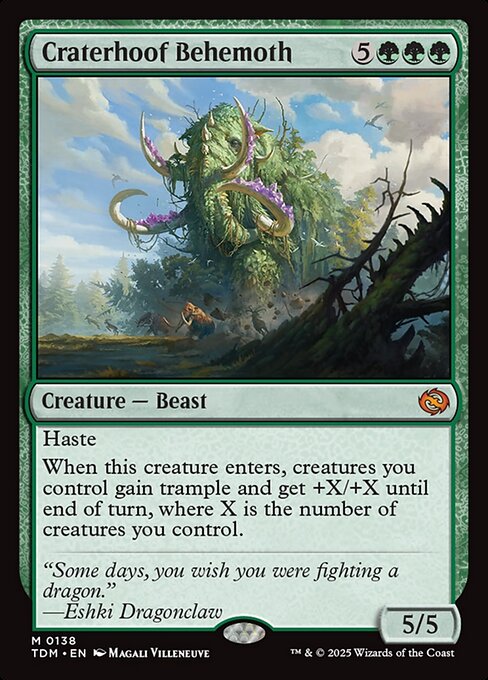
Craterhoof turns creature quantity into damage: its entering trigger gives your creatures trample and a boost based on your creature count. A board full of modest tokens is exactly what it wants. It is especially threatening when a creature tutor can put it directly onto the battlefield.
Craterhoof itself has haste; its trigger does not give the other creatures haste. Newly created Squirrels still need Crossroads, Memorial, a sufficiently large Finale, or another applicable effect to attack immediately. Also count how many creatures are untapped before spending the whole army on mana.
Akroma's Memorial — Baller only
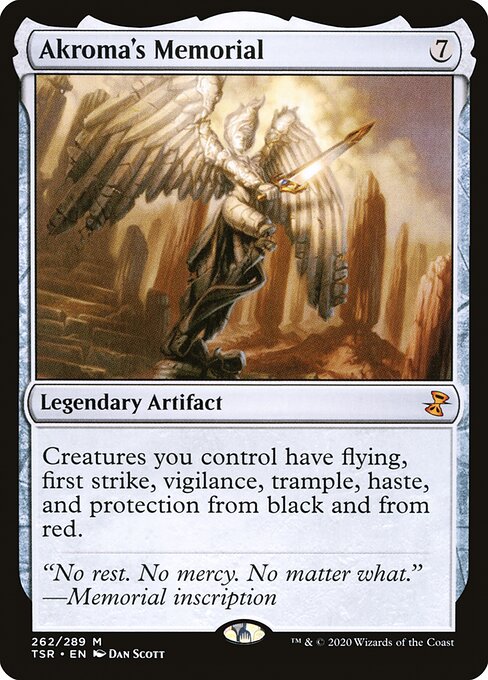
Memorial supplies flying, first strike, vigilance, trample, haste, and protection from black and red. Haste is particularly important when the winning army was created this turn; flying and trample make connecting easier. Unlike Craterhoof, Memorial does not make a small army larger, and it does not untap creatures used to pay for the turn.
The shared Champion of Lambholt helps creatures get through blockers as she grows. Banner of Kinship supplies a tribal power boost, with its starting counters determined when it enters. Both remain useful in Budget, but neither alone supplies every ability lost with Memorial.
Rules details worth getting right
- The Great Henge draws from nontoken creatures entering, not ordinary Squirrel tokens. Its cost reduction cannot remove the two green mana in its cost.
- Ashaya, Soul of the Wild makes nontoken creatures Forest lands, but not basic lands. Earthcraft cannot target them just because they are Forests.
- Concordant Crossroads gives opponents' creatures haste too. Plan your timing around that shared benefit.
- Fresh Meat is recovery after creatures die, not preventative protection. Let a destroy-based wipe resolve, then cast it; tokens that went to your graveyard count. Exiled creatures do not.
- Asceticism provides hexproof and repeatable regeneration. Regeneration does not answer exile, sacrifice, or destruction that explicitly prevents regeneration.
The budget build: keep the army, change the engines
Budget here means cheaper than the premium list, not a promise of a sub-$100 deck. Several strong cards remain in both versions. Growing Rites of Itlimoc, Second Harvest, and Chitterspitter are already in both lists—they are retained tools, not extra copies you add when converting.
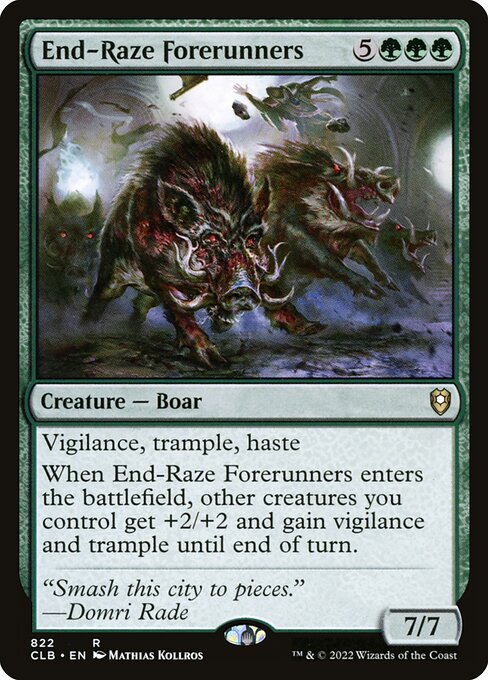
- End-Raze Forerunners and Overwhelming Stampede: alternative combat finishes. Their damage output is board-dependent; neither is an exact substitute for every ability on Craterhoof or Memorial.
- Lead the Stampede and Commune with Nature: trade precise creature tutoring for cheaper creature selection. You gain affordability but lose certainty.
- Nut Collector, Squirrel Wrangler, Chatter of the Squirrel, and Acorn Catapult: reinforce the creature type the deck is supposed to celebrate.
- Sylvan Safekeeper and Wrap in Vigor: different protection tools with real costs and limitations. Wrap in Vigor is not a replacement for hexproof or protection from exile.
- Ulvenwald Tracker, Vitalize, and Harvest Season: add repeatable fighting, a creature untap effect, and a reward for having tapped creatures.
Why we do not buy another “budget replacement” for every cut
Commander is normally singleton. If a cheaper card is already in the list, naming it as an alternative does not create a second legal copy or fill the newly opened slot. We keep the overlap, accept the lost redundancy or functionality, and use the open slots to support the revised game plan. The exact fourteen additions are listed below.
Cradle out; Growing Rites and Three Tree City already stay
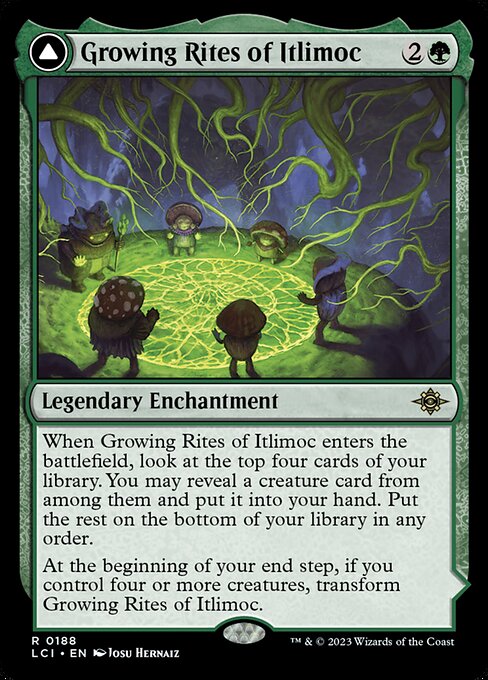
Growing Rites first offers creature selection, then can transform at your end step if you control at least four creatures. Its land side can produce green mana for every creature, making it a strong long-game counterpart to Cradle. It requires an initial mana investment and a transformation condition, so it does not reproduce Cradle's immediate acceleration.
We do not add another Rites after cutting Cradle. Rites, Three Tree City, and Circle of Dreams Druid are already in Budget. The land slot becomes one additional basic Forest, taking the count from twenty-four to twenty-five. That improves dependable green access while the retained engines handle the larger turns.
Doubling Season out; Second Harvest already stays

Second Harvest can turn an established token board into a much larger one at instant speed. It is already in both decks. It does not keep doubling later token creation, does not double counters, and has little to copy if your board is empty.
Rather than adding a duplicate Harvest, Budget spends some opened slots on more Squirrel production: Nut Collector, Squirrel Wrangler, Chatter of the Squirrel, and Acorn Catapult. The strategy gains additional ways to establish creatures while giving up Season's repeatable multiplication.
Earthcraft and the mana loops out; Chitterspitter already stays
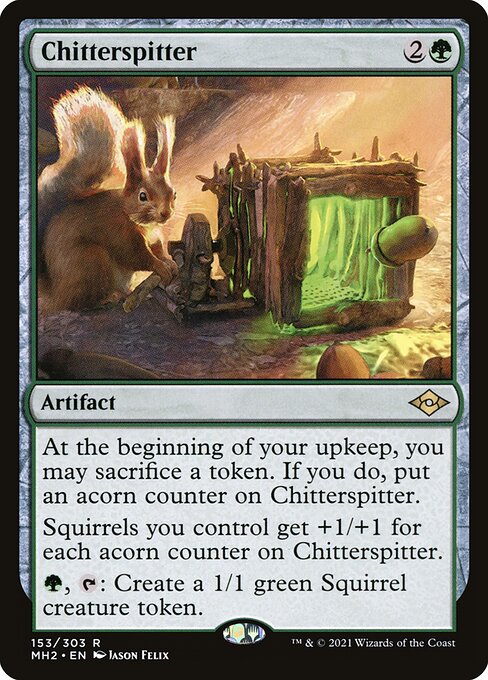
Chitterspitter produces a Squirrel with its activated ability and can turn a token into an acorn counter during your upkeep. Those counters strengthen all your Squirrels. It is already in both lists because it supports the tribal combat plan.
Chitterspitter does not untap lands or turn the army into mana. Calling it a cheaper Earthcraft would hide the real change. Budget removes Earthcraft, Cryptolith Rite, Jaheira, and Phyrexian Altar, intentionally giving up those particular engines. Vitalize and Harvest Season help with different resource needs, but they are not identical repeatable loops.
Squirrel Nest stays as a token source even without Earthcraft. Thousand-Year Elixir also stays: it still helps mana creatures such as Circle of Dreams Druid use their abilities immediately and offers a creature untap. Retaining a useful piece does not mean its removed combo partner must be replaced.
Henge out; several draw engines already stay
Skullclamp can convert suitable small creatures into cards, although an anthem can keep a Squirrel alive through the equipment's toughness reduction. Toski and Ohran Frostfang reward connecting in combat. Shamanic Revelation rewards a wide board directly. Beast Whisperer draws from casting creature spells, while Guardian Project works with qualifying nontoken creatures entering—not ordinary token creation.
These shared cards cover different situations. Budget adds Lead the Stampede and Commune with Nature for further creature selection, but does not pretend either is a complete Henge replacement. The deck loses Henge's bundled mana, life, and counters while retaining multiple routes to more cards.
Crystal out; Medallion already stays
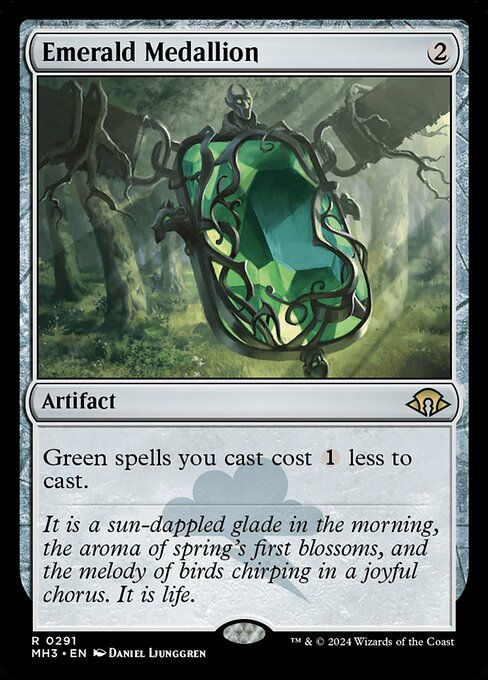
We do not need a second Emerald Medallion after cutting The Earth Crystal. The shared Medallion preserves one cost-reduction effect; the deck accepts losing the second effect and the Crystal's counter synergy. The resulting slot can support Squirrels or interaction instead of chasing an exact imitation.
Premium finishers and protection: real additions, real tradeoffs
End-Raze Forerunners and Overwhelming Stampede are actual additions. They offer combat finishes after Craterhoof and Memorial leave. They do not recreate the full package: a Stampede needs an appropriately large creature for its boost, and neither addition grants the rest of the army Memorial's ongoing haste and flying. Shared Finale, Concordant Crossroads, Champion of Lambholt, and Banner of Kinship continue to supply complementary finishing tools.
Wrap in Vigor is also an actual addition, not another Heroic Intervention. It supplies regeneration for your creatures, which cannot save them from exile, sacrifice, or destruction that prohibits regeneration. Shared Royal Treatment, Veil of Summer, Asceticism, and Fresh Meat address other situations; none is universal insurance. Sylvan Safekeeper adds another creature-protection option, but spending lands is a real cost.
The complete conversion between the linked lists
These are the aggregate changes, not fourteen claims of one-for-one functional equivalence.
Remove one each: Gaea's Cradle; Earthcraft; Craterhoof Behemoth; Akroma's Memorial; Doubling Season; The Great Henge; The Earth Crystal; Worldly Tutor; Green Sun's Zenith; Natural Order; Heroic Intervention; Phyrexian Altar; Cryptolith Rite; Jaheira, Friend of the Forest.
Add one each: Forest; End-Raze Forerunners; Overwhelming Stampede; Lead the Stampede; Commune with Nature; Nut Collector; Sylvan Safekeeper; Acorn Catapult; Ulvenwald Tracker; Squirrel Wrangler; Vitalize; Wrap in Vigor; Harvest Season; Chatter of the Squirrel.
That is 14 cards out and 14 cards in. The budget list has 25 basic Forests rather than 24.
Power level is a table conversation
The video presents the baller build as a high-power, Bracket 4 experience and the budget build as a toned-down, Bracket 3 direction. Treat those as the episode's intended table expectations, not a guarantee based on price alone. The budget conversion removes Earthcraft, Phyrexian Altar, Cryptolith Rite, and Jaheira instead of assuming one expensive-card cut removes every engine. Discuss the actual list, combo expectations, and current bracket guidance with your pod before playing.
A note on prices
We are not repeating fixed prices in this written guide because singles change. Numbers in the video are production-time snapshots, and the cost of replacement cards is not the cost of buying a full deck from scratch. Check current listings and your own collection before purchasing.
Watch the sections you need
- 4:22 — Meet The Unbeatable Squirrel Girl
- 5:42 — Squirrel Girl vs. Chatterfang
- 7:24 — Earthcraft and the mana engines
- 9:49 — Cryptolith Rite, Elixir, and Jaheira
- 12:52 — Rules traps
- 15:19 — Combat finishers
- 16:46 — Protection and recovery
- 19:21 — Budget costs and swaps
- 22:20 — Replacing Earthcraft and cutting engines
Build it
Choose the Budget build or the Baller build, then make it your own. Browse singles and sealed at Arcane Arena.
Want another Budget & Baller guide? Try Avengers Assemble or Draconic Destruction.
Would you lead the Squirrel army or join the table trying to take it down? Tell us which commander you want to see next.
Unofficial fan content. Magic: The Gathering is © Wizards of the Coast; Marvel characters © Marvel. Not affiliated with or endorsed by either. Deck lists: Arcane Arena on Archidekt. Card text and card images: Scryfall.